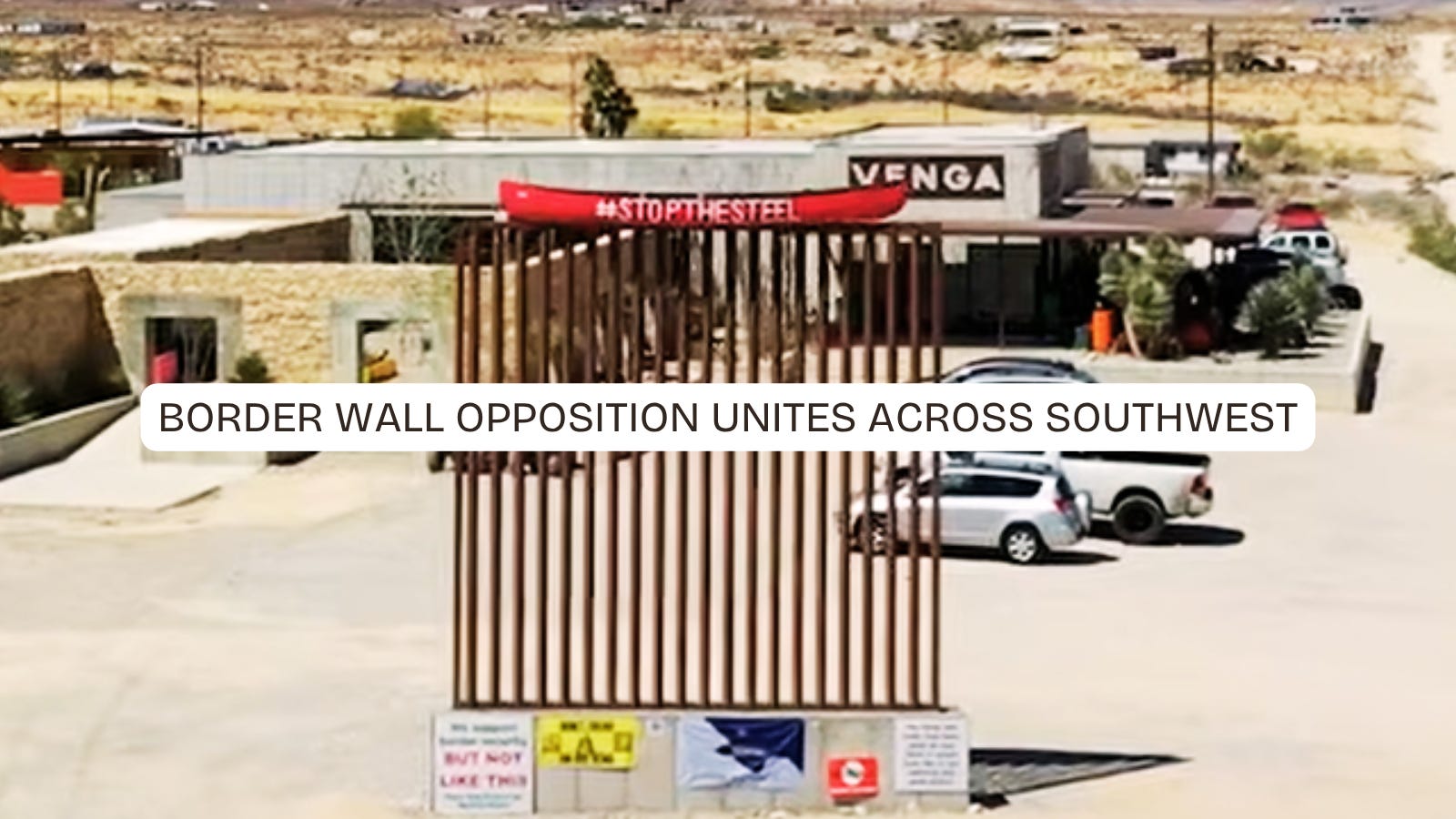
In the Southwest, Trump's Border Wall Can't Stand Up Against Local Power
The Power of Land Advocates on Our Southern Border
Anyone passing through the state for more than 5 minutes knows one thing for certain: you don’t mess with Texas. The unofficial state slogan covers souvenirs, billboards, and bumper stickers everywhere from Amarillo to Houston. It is ubiquitously visible in the landscape, but even more than that, the attitude that comes with it seems to be worn proudly on the sleeve of everyone you meet there.
Last month, I was so happy to see that bullish spirit in the opposition to the ongoing border wall construction in Big Bend National Park.
Thousands of land advocates showed up on the steps of the Texas Capitol with posters and megaphones to tell their leaders what a horrible idea the new construction is. With a bold sense of righteousness—that, honestly, we can all learn from—locals declared that they are not backing down.
Event organizer Drew Heugel wrote in an Instagram post: “Hold the f***ing line.” The protest featured state politicians, popular musicians, and land advocates, all with fiery words to share with a raucous crowd.
Democratic State Senator Sarah Eckhardt said, “Our land, our rivers are our public…vitality, and our heritage. And we’re gonna keep it. Come and take it!”. Republican congressional candidate Brandon Herrera declared that he had “never found a single person who thinks this is a good idea.” Another speaker led the crowd in chanting, “No! Damn! Wall!”
These Texans’ battle cries are powerful, in part, because they are very well-backed.
Border wall opposition across the Southwest is in lockstep. Judges in all 14 counties along the border are calling on DHS to listen to communities before they start construction. The region’s Republican and Democratic leaders alike are speaking out against the border wall in their communities. They cite very real concerns about disruption to tourism, down-river pollution, and a general degrading of feelings of home.
Tribal communities are sounding alarms about irreparable harm done in regions of the border wall where construction is already destroying their land.
Last week, DHS construction of a border wall through a mountainous region of Arizona’s Sonora Desert tore through sacred tribal land, a 1000-year-old fish-shaped walking trail, and vital migration paths for wildlife.
Lorraine Marquez Eiler, Elder of the Hia-Ced O’odham tribe, said that amidst conversations with DHS about the importance of the federally protected land, a construction crew bulldozed it at an accelerated speed behind their backs. The tribe is now seeking legal repercussions and working with their congressional representative to find justice.
The worst part? It’s all shamelessly unnecessary.
No one crosses the border through this area because of its inherent natural obstacles.
Sheriff Thadeus Cleveland in Texas’s Terrell County stood in front of a view of towering mountains and massive canyons along the border. He said, “If someone’s willing to cross the wall that is behind me, another 30 foot barrier isn’t going to stop them.”
In response to all of this pushback, DHS changed the description of their proposed border wall to a “virtual wall” on their website. They haven’t made an official statement, or said that a physical wall is off the table. And while there is relief in the changed classification, our land advocates in the Southwest are not taking their foot off of the pedal.
What Comes Next
For Big Bend, watchdogs are keeping an eye out for any new construction while environmental legal groups and localities fight back in court. An alliance is forming across the southern border. Advocates are sharing successful tactics in stopping construction, and communities are amplifying those efforts to create a unified defense.
They are demanding reinstated environmental protections, a halt to the border wall construction, and meaningful citizen involvement in the decision-making process.
Advocates are also spreading the word so that more people across the country join the resistance.
This fight is all of ours. Don’t mess with Texas. Don’t mess with our land. We’re not giving an inch of it away.
With love and hope for the future,
Stephanie
Thank you for spending some of your time here with me today.
To support my work, share, subscribe, and then get outside and get loud!
What aspects of the Southwest’s border wall protests are applicable to your local activism?
What characteristics of your local protests do you think other places might learn from?


Thank you for fighting and not giving away an inch of park land.