Parks, Greenways, And The Unequal Economy
What does the park of the future look like?
When I asked residents about their experience with a popular greenway trail in their neighborhood, I got way more than I anticipated. While they touched on expected topics of experiencing natural beauty and having access to different kinds of recreation, our conversations often bled into more personal hopes and fears for their homes.
They talked about the trail’s role in positively changing perceptions of their neighborhood, providing more economic hopes for their main street, and connecting them to new places and people across the city. It was a door opener.
But it wasn’t all rosy.
With these awesome benefits that increase the value of a place—which are also loudly touted amongst greenway planners—came some significant drawbacks. Homeowners witnessed rental properties being emptied abruptly. Polished, pricey businesses cropped up nearby. While their property values blossomed, the neighborhoods surrounding the trail slowly began taking on a new, upscale character.
And there was a conflict in wishing for assets that would make their streets more pleasurable, and wondering whether the changes would price out beloved local people and places.
As a researcher, there was a lot to unravel.
When it happens on the trail, it happens in the town.
One thing was clear though: the links between what was happening on the greenway, in the neighborhood, and in the city’s planning practices were inseparable. When leaders in the city prioritized the greenway as an economic development project, the trail was designed with features and qualities geared toward drawing in visitors and tourists. Increased property values and tax revenues would be a boon to the whole city’s economy, and benefits to locals were assumed to be included in that vision.
Unfortunately, this phenomenon was not unique to the community that I researched.
The worldwide trend in planning greenways and parks for top-down profit has led to some seriously problematic outcomes for residents—including rapid gentrification.
As a park planner, I saw the mentality of pairing parks and economic development departments in real time. Neighborhood parks were backburnered while upscale, downtown parks took the lion’s share of resources. Social aims of equity and access were downplayed while tourism goals were rewarded. And unknowing park neighbors greatly anticipated developments that would likely price them out of their treasured communities.
Exclusive economies touch us all.
Today, as economists raise alarm bells about K-shaped economic trends and markets shifting to luxury goods and services, I can’t but help notice the parallels with our public park practices.
While the stock market booms and holiday markets press on with relentlessly cheery outlooks, most of us find ourselves slowly slipping out of the culture being built around us. Though we may get caught up in excitement around the beautiful, sparkly aspects of development that come with an economy geared toward the rich, our opportunities to benefit from them will likely be in short supply.
Many people say that no one has solved gentrification or vast inequity in the economy, and assert that this is just the way of the world. But I disagree.
Innovators in the park-building community are taking measures into their own hands to fight the force of unrestrained neoliberal capitalism. These often include robust local community involvement with and ownership of lands.
Likewise, reformers in public policy talk about publicly owned grocery stores, free transportation, and universal health care.
In both sectors, the most promising ideas cater to community first, and place economic benefits second.
Though they haven’t been widely adopted to change the way public spaces are planned, there are signs that they could be successful if fully embraced.
I think now we’re at a point of widespread necessity that might just make them especially useful. Who knows, maybe we can finally try something besides the tried-and-truly-inefficient economic practices we so diligently abided by for so long.
Rethinking political stances = shifting economic beliefs.
For community park advocates, it can be maddening to petition for change when so many others insist there is no need for it. Though inequity is there and can be clearly documented, it is not blatant enough to engender collective outrage.
Plus, it is really hard to argue against beautiful parks, even if they are exclusively in places that most directly benefit the wealthy.
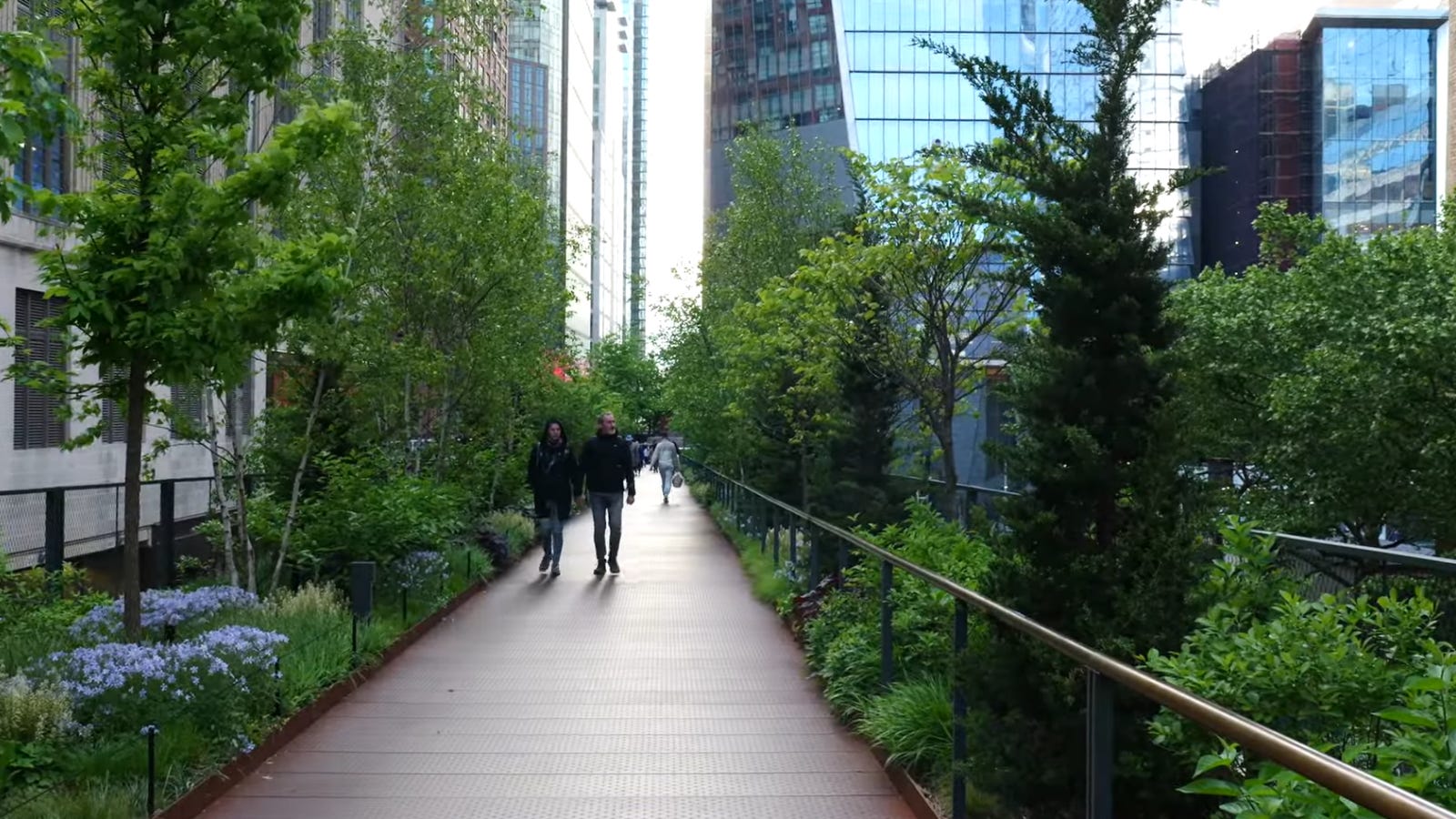
Case in point: NYC High Line (pictured at the top of the article)
The High Line is one of the most beloved attractions in NYC now, serving as an oasis of greenery on an old rail line that cuts through the length of the West Side of the city. It is really a wonder to behold with native plants, thoughtful pedestrian design, and museum-worthy art installations. However, with the beauty of the trail and its intricately planned landscape comes an exclusivity that serves outsiders at the expense of local residents.
Rental and retail prices along the development have skyrocketed, and nearby low-income communities often feel unwelcome and are excluded from expected benefits. Additionally, the meticulous landscaping takes intensive professional care that depends on continued funding.
But as you make your wishlist for the environment around you, consider an alternative to the now-popular, highly-manicured landscapes that define park development. In an equitable world, parks do not need to be high-end to be valuable. In fact, the look of a park that fits most soundly in your surroundings is probably a little rugged and wild.
It probably looks a little homemade and is full of features that only really make sense when you live down the street. It will likely benefit you much more than a cookie-cutter playground or splash pad, and you’ll interact with your neighbors there, because it meets their needs too.
And when we experience this up-close-and-personal kind of civic involvement, it is easy to feel the effects that seemingly far-off political decision making has on our everyday lives.

Case in point: Maria Solá Green Space in South Bronx (pictured with residents above)
Residents in the Bronx adopted an area of greenspace in their neighborhood through an Adopt-A-Highway program. Named after one woman who tended the garden with her husband who carried on her legacy after she passed, the locally-claimed and cared for lot has become a community haven. It is characterized by handmade art and rugged-but-lovely landscaping that fits just right with how local residents use it.
Utilized for cookouts, memorial services, educational programs, and just connection with neighbors in general, the space has spurred a hands-on advocacy among neighbors. It is now part of a larger vision and campaign for locally-controlled greenway, with environmental justice and social equity at the forefront of the movement.
A park on every corner, in creation with residents
While park advocates are quick to celebrate new and beautiful park additions to our public spaces, however they may come, we would be wise to look at them with a critical eye. When they are designed to draw in visitors and boost tax revenues, chances are that they will backfire on us.
Because focusing on profit almost always undercuts our visions of social connection and environmental and economic sustainability.
I would like to challenge park planners, landscape designers, and park advocates to counter the current trend by imagining a new park of the future. In place of highly manicured fields and gardens, include wild natives. In place of awe-inspiring installations with giant price tags, create a structure that can evolve and grow along with resident needs and ambitions.
Use expertise to promote low-maintenance, space-appropriate design, to build up community support structures, and to share technological knowledge about how to efficiently meet the social and environmental needs of surrounding people and wildlife. To me, when we look to the future, we look toward citizen design and control.
What we see in our public parks, we see in the world around them… the opposite is true, too.
Today, I see a movement of Americans reclaiming control of their world. The structures that for too long were led with greed and misguided capitalist experiments are challenged, uncovered for all their weaknesses and cruelties. We are relinquishing our roles as bystanders that blindly trust those in power, instead taking on a more hands-on role. We are building for ourselves, with our neighbors, and in concert with a sustainable environment.
Let’s create parks that help us along our way, feeding our success and showing us the way to plan and sustain a democracy that cares for us.
With love and hope for the future,
Stephanie
Support from readers like you strengthens my work. If you want to help me fight for truth, land, and local voices—against Trump and others—please become a paid subscriber today:
Tell me about your local parks and gardens, and what you appreciate most about them.
What makes a park most useful to you?
Read more:
NYC Highline:
https://www.roosevelthouse.hunter.cuny.edu/?forum-post=12947
https://journals.sagepub.com/doi/abs/10.1177/0308518X16677969
https://www.sciencedirect.com/science/article/abs/pii/S0169204619314574
Bronx Community Land Trust Parks:
https://www.thelandstewards.org/


Good piece. Parks are also critical for urban wildlife and more naturalized "messy" parks are far more useful habitat. I write and speak a lot (and for years) about the broken and highly unequal form of capitalism that is ravaging the planet and keeping people trapped in poverty and/or diminished health and well-being.