The Stewards We Choose
The ways in which we opt into a generous world
After a three-week hiatus, I headed over to my sister’s house for a visit. She suggested it offhand the day before: “Hey, you should come see the backyard. It isn’t done yet, but we’ve been working on it.” She’s a master at downplaying her accomplishments, but I knew when she mentioned it that it would be worth seeing.
It didn’t disappoint.
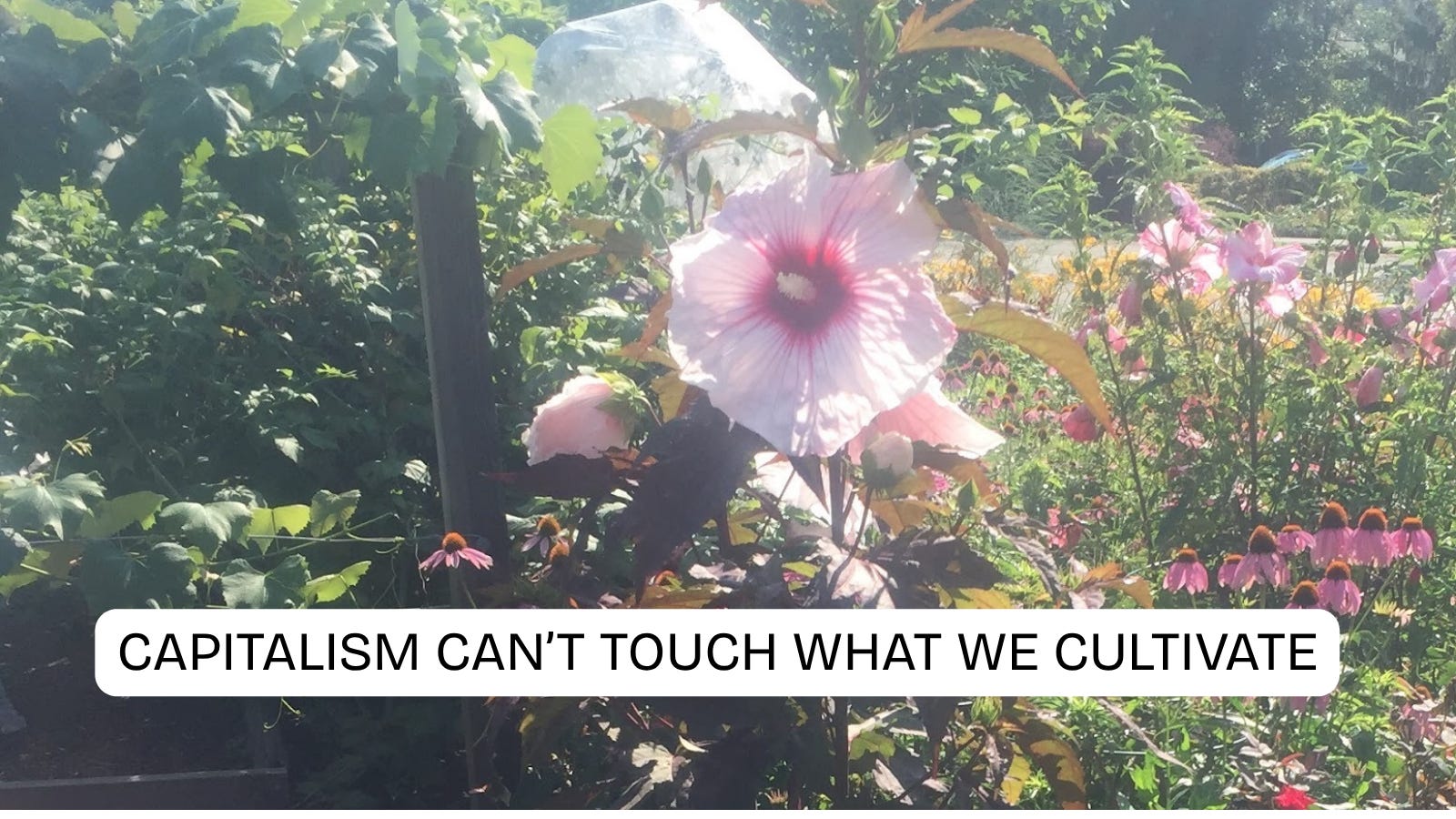
Emerging from the disarray of winter, her garden was shining bright. Flowers bloomed in fresh beds of mulch, and vibrant groundcover blanketed the gentle hillside where fall leaves had been cleared. The space was full of life, and it was evident that a massive amount of energy had been poured into its revival.
Maintaining this backyard is a true commitment. It was originally created by the previous owners, who were passionate gardeners with the time and focus of empty-nesters. The view from the back porch captures a lush array of greenery, a stream flowing into a quiet pond, and a little manicured stepstone pathway winding through it all. When they sold the property, they chose my sister’s family over higher bidders, because they loved the idea of children enjoying the home they had built.
They chose their stewards well.
As we walked, my sister excitedly pointed out new plantings, trimmed trees, and improvements to the vegetable garden. She’s discovered that by doing just 30 minutes of work every day, she can keep up with it all. For her, it isn’t a chore—it’s a favorite escape.
This exchange highlights the importance of our relationship to the land, even in a capitalist world.
When people feel a soul-deep attachment to their environment, they care for it well and pass it on thoughtfully. The idea of “maximum gain” begins to mean something far more than bottom line costs. Calculations of money and time are replaced by a sense of sustainability and legacy.
The bounty of nature is valuable, and it’s even more awe-inspiring when it’s shared. While the preservation of such a treasure is a responsibility, it is also a gift.
From church plant sales to “Friends of the Trails” groups, and from backyard caretaking to city park volunteerism, we are part of something beautiful when we connect to one another through nature. As our government challenges the definition of public lands, we are invited to explore that bond more deeply, and to participate more fully with our fellow citizens more fully in protecting what we love.
With love and hope for the future,
Stephanie
Thank you for spending some of your time here with me today.
To support my work, share, subscribe, and then get outside!
In what ways do you steward the environment for others?


I am a forester and a very ecologically minded one at that. I have helped forests recover from destructive management and devastating storms. I also care for the movement of water within and across a forested landscape to prevent erosion and sedimentation. It’s a joyful even if not remunerative occupation advising other landowners how to care for natural systems.
What struck me most about this piece is its reminder that democracy doesn’t fail only through dramatic ruptures—it erodes through a series of choices made by people entrusted to steward shared institutions.
This week has made that painfully clear. When mechanisms meant to protect participation, representation, and fairness are instead used to narrow access or entrench power, the problem isn’t just technical or legal—it’s moral. Stewardship requires restraint, humility, and an understanding that authority is temporary and borrowed from the governed.
I appreciate how this essay reframes leadership not as domination or clever maneuvering, but as care: care for processes, for norms, and for future participants who inherit the consequences of today’s decisions. When leaders treat systems as tools for exploitation rather than trust-based infrastructure, democracy becomes hollow long before it formally breaks.
The question of “who we choose as stewards” feels especially urgent right now. It’s not only about elections—it’s about whether those in power see themselves as guardians of a fragile democratic ecosystem, or merely as winners entitled to extract whatever advantage the rules will allow. That distinction determines whether democracy remains a living practice or a shell.