We Beat the Robber Barons Before. We Will Do It Again
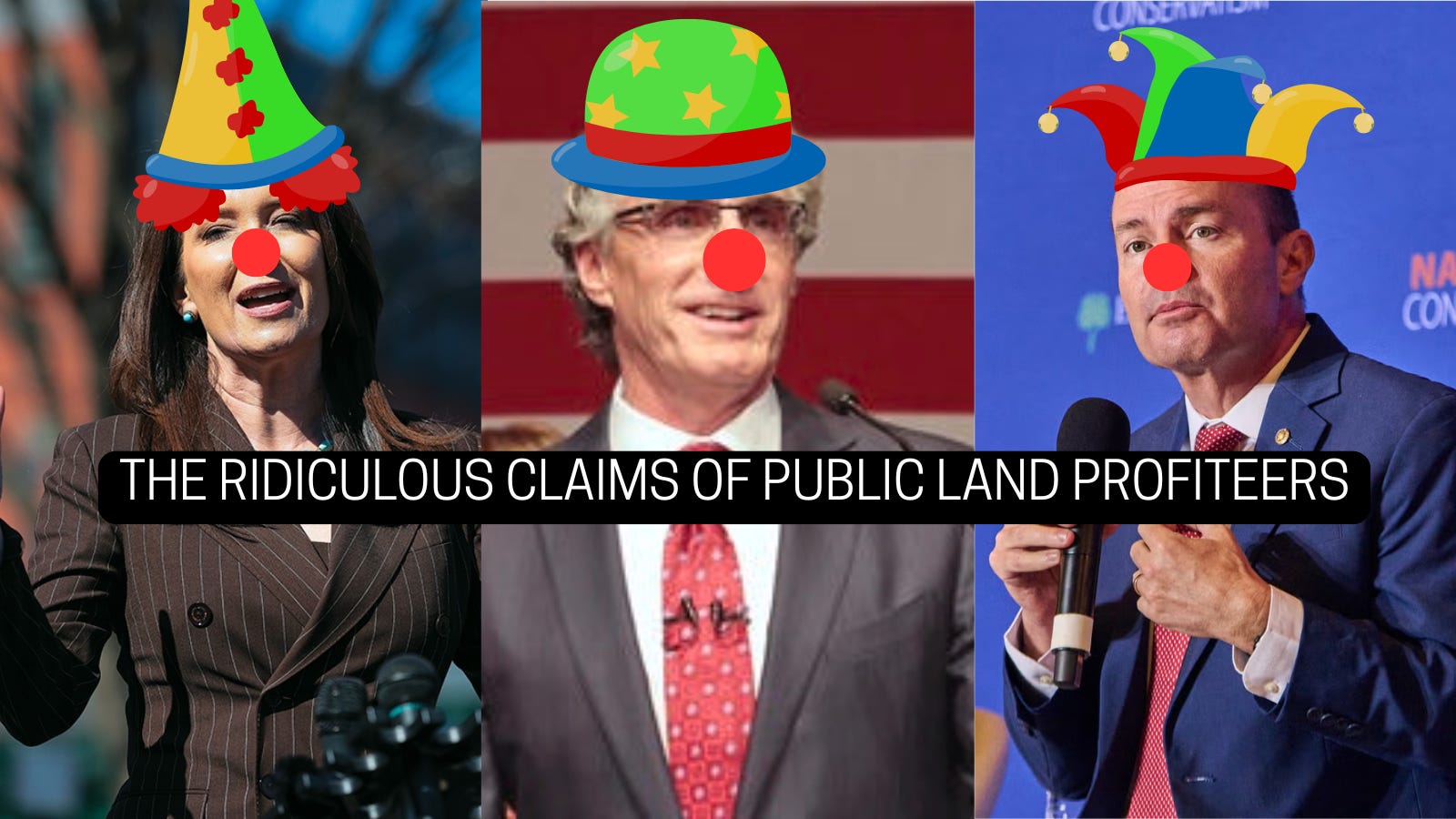
Let's make them look as ridiculous as their talking points sound.
Just a few hundred feet from a bustling river-adjacent greenway, a local resident explained just how remarkable its success truly was. He marveled at how far his city’s relationship had come with its waterway, and his eyes grew large as he said, “I mean for years it was used essentially as a sewer. No one wanted to go near it.”
The subtext was something along the lines of, I know you wouldn’t believe it now.
I was happy to hear it, but not completely surprised, because the phenomenon seen in his community was one I knew was echoed around the world. In discussions about greenways (and blueways), remediation of both the environment and peoples’ feelings towards it is a meaningful and prevalent theme.
The pattern goes something like this: a lucrative private industry is embraced by a locality, it extracts their resources until they are depleted, the industry departs abruptly, and the residents are left to mend their wreckage.
But with this instigating need, some innovative visioning, and lots of hard work, land that was once abused by private industry is recovered to a more natural state which works toward the public good. People’s relationships with their land is then highly valued, and the environment is upheld more for its placemaking and life-supporting qualities than for the resources that can be temporarily extracted from it.
This is when we see people embracing outdoor recreation, alternative transportation, community gardening, and environmental and cultural heritage preservation.
As it turns out, this local shift mirrors a long-standing trend at the national level.
A history to fuel hope for land preservation
In 2022, Professor John Leshy published an extensive book covering the history of America’s public lands from a legal standpoint. The title, Our Common Ground, is inspired by the fact that from their inception, federal lands have been advocated for by state and local governments and their citizens. The depths of cooperation and innovation that have led to today’s system of national forests and parks are astounding.
Full of conversation between citizens and the federal government, land management policy has been crafted and refined over generations of people who recognized a need to protect it from industrial use. It is the victory of the commons, wherein water supplies, scientific artifacts, recreational gems, and inspirational experiences are preserved and upheld by an entire society.
With little exception, expanding federal land holdings—and the degree of conservation of those land holdings—has been overwhelmingly popular across the political and geographic landscape.
Given this rich people-forward history, there are a few points every land advocate should know when battling people and entities that argue against supporting federal land management agencies.
Flaws in arguments of federal land opponents
When people like Secretary Burgum, Secretary Rollins, and Senator Mike Lee assert that the federal government is incapable of managing federal lands, they are going against hundreds of years of collective wisdom that created those land management institutions and policies.
When they say that the federal government is hamstringing states from rightfully using land within their borders, they are going against the wishes of their constituents who fought for decades to protect their community’s resources.
And when they argue that funding should be cut for the agencies which care for federal lands, they are cutting provisions that have long been agreed upon by the public that asked for them at the local level.
There is a straight line between their efforts to undercut these departments and their subsequent complaints about inefficiency.
If they had left it alone or supported the public’s wishes, federal land management would be a shining star in our democracy. Water and air quality would improve, Native rights and relationships would be strengthened, biodiversity would be strengthened, and affordable outdoor recreation would be more accessible to everyone.
As has been the trend since at least 1890.
Public land opponents are in for a fight
Unfortunately for Burgum, Rollins, and Lee, federal land is an area like none other in politics when it comes to public involvement.
It is founded on local knowledge and experience—not fickle opinions of single leaders.
It is embraced by a wide swath of people whose ancestors were a part of petitioning for change after seeing industrial harm first-hand—not a bunch of people swayed by some zealot’s talking points.
And it is guarded by local residents, grassroots organizers, passionate professionals, and knowledgeable academics who have a long tradition of working together—not a disorganized opposition.
Advocates need to defend like never before
Though there is a lot to draw strength and hope from, advocates for national parks and forests are now called to defend these resources like never before. The Trump administration is stacked with people who favor industrial priorities over people’s needs.
In recent interviews, Leshy has spoken about the implications of policy changes that have been tried or implemented in the last year.
Specific threats he noted included a provision in the funding bill that requires federal land agencies to offer more leases to private industries and the cutting of money and personnel that are necessary for proper maintenance of lands. These two changes might change forever the course of our federal land system.
Ultimately, the message underlying all of this history is simple: the future is up to us.
“If you want to continue this trend of holding and protecting public lands, you have to engage in the political process. Because if you don’t, it can all go away pretty quickly.”
-Professor John Leshy
If we want our public lands to continue on a course that benefits the American people for generations to come, we have to jump into the political fray.
This means we all need to vote, to talk with friends and neighbors about our public lands, and support your national parks and forests in whatever way you can. Leshy also advocates for people to join friends groups for public lands near them, noting all-around benefits.
He says this type of participation “will make you a better person, do you a lot of good, and be good for the system.”
We know the cycle, and we’re breaking it.
Americans have taken on the burden of recovering their lands and livelihoods after abuse from unaccountable profiteers for over a century. Soil and rivers are still recovering from rampant, untamed industrial pollution, and resilient yet wary communities are just now learning to trust their surroundings again.
We are just now getting to really enjoy them as a public resource.
Somehow at this moment, the robber barons are deciding to once again swoop in and take it all away. They just couldn’t let our wondrous land be enjoyed by all. They chose now to pounce on an opportunity to take it for themselves, ruining it for the rest of us for generations to come.
But we know better than to let them steal our public land and water. We know better how to fight for it as a right, because we’ve seen how much we need it.
They may not believe it now, but we’ve got a history of fighting for and shaping our world. And we’re about to put it to use.
With love and hope for the future,
Stephanie
Staying involved, connected, and informed is crucial for protecting our national lands. To be a part of this community and support my work, please become a subscriber today!
Listen to Professor John Leshy here:
https://daily.jstor.org/the-victory-of-public-lands/


What a well written assessment of the situation and the task at hand. Thank you for this.
Yes we will! And very well said.